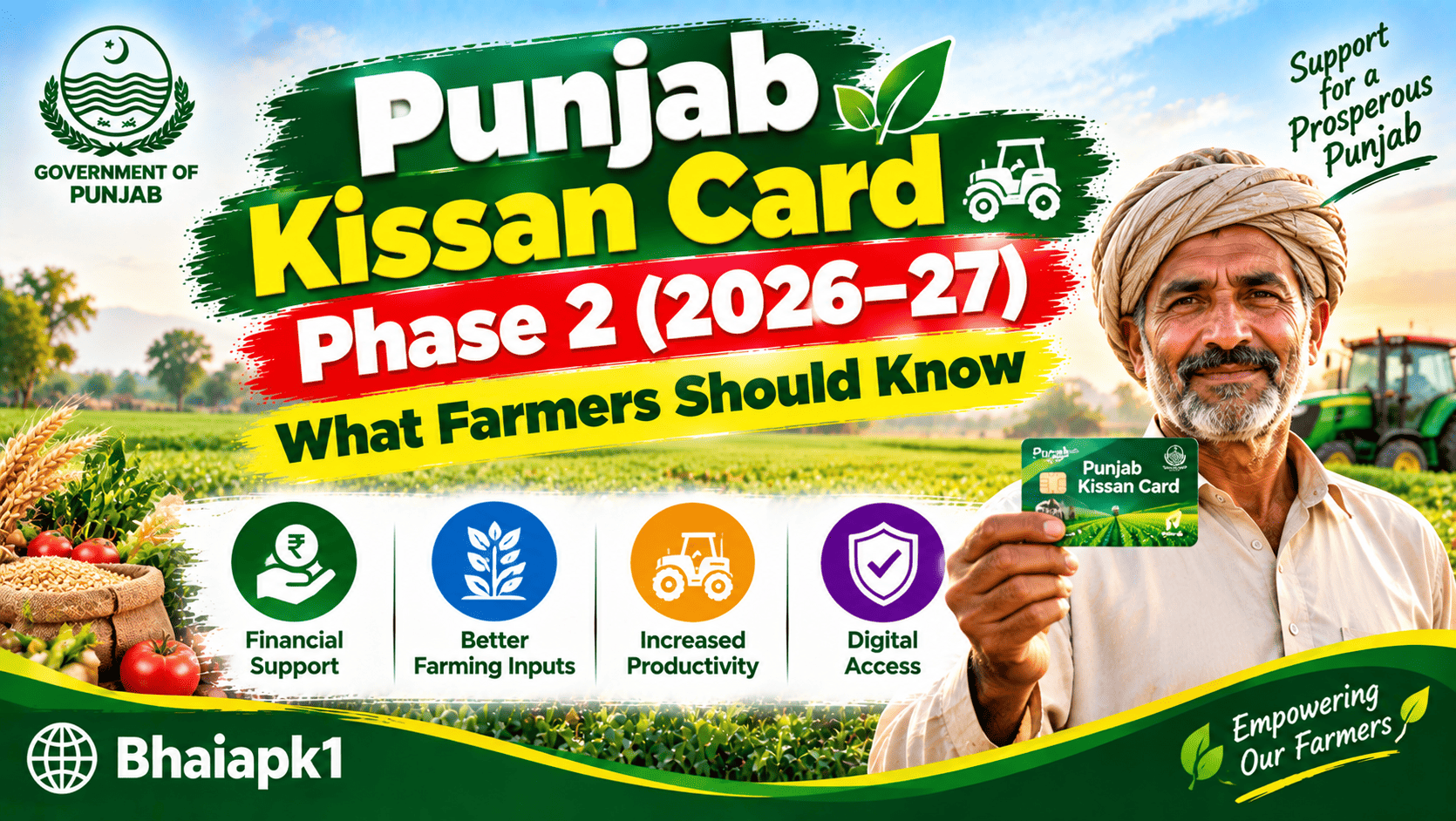
Walk into a fertiliser dealer in southern Punjab this Kharif and you will see farmers swiping a Bank of Punjab card instead of begging an arhti for credit. That card is the Chief Minister’s Kissan Card, and its second phase now sits at the centre of how the province finances crop inputs.
This guide separates what the government has actually stated from what still needs checking before you spend a day at the bank.
Quick Overview
- The Kissan Card is a Bank of Punjab card that lets registered farmers buy inputs such as fertiliser, seed and pesticide from approved dealers on interest-free finance.
- Phase 2 was approved in July 2025 and widened eligibility to farmers with up to 25 acres, according to news reports of that meeting.
- On 1 July 2026, officials told the Chief Minister that 900,000 cards had been issued and Rs360 billion disbursed, with a 99 per cent recovery rate.
- The stated target was one million cards by 31 August 2026. We could not confirm whether it was met.
- Status: an active programme, with enrolment in batches. No single public deadline was found.
What Is the Kissan Card?
It is a digital input-finance system run by the Punjab Agriculture Department with PITB, linked to land records (PLRA), NADRA and the Bank of Punjab. Instead of cash, the farmer gets a limit he can spend at registered suppliers.
The idea is simple. Money goes to the input, not into the middleman’s pocket.
Who Is Eligible?
The Punjab government’s scheme page lists these basics:
- Punjab resident with a valid CNIC
- Agricultural land recorded with the Punjab Land Records Authority
- Mobile SIM registered on your own CNIC
- No default in the credit bureau record
The original phase covered holdings of 1 to 12.5 acres. Phase 2 was announced for up to 25 acres. If your holding sits near a limit, check before you travel.
Benefits and Loan Limits
Cardholders buy fertiliser, seed and chemicals at registered dealers. Reports in 2025 also mentioned diesel and a 30 per cent cash withdrawal facility, and the Chief Minister abolished the Rs1,000 processing fee.
The first-phase page describes a six-month card with a limit capped at Rs30,000 per acre. Limits were raised in 2025, but we did not find a current official per-acre figure. Treat any number quoted on social media with caution.
For Kharif 2026, officials said Rs116 billion was allocated, of which Rs62 billion had been used by early July.
How to Apply
- Make sure your land record is current in the PLRA system.
- Confirm the SIM you will use is registered on your own CNIC.
- Check eligibility through the route published by the Agriculture Department. The scheme page has listed an SMS service on 8070; confirm it still works before relying on it.
- Complete registration. Your data is verified against land, NADRA and credit records.
- You receive an SMS naming the Bank of Punjab branch where your card is waiting.
- Visit with your original CNIC, activate the card and set your PIN.
The Agriculture helpline is 0800-17000.
Documents Required
- Original CNIC
- Mobile number registered in your name
- Land record details (fard or PLRA entry)
- Bank branch visit with biometric verification, where requested
Important 2026 Status
Active programme; new enrolment is ongoing but not confirmed as open to everyone.
The 1 July 2026 briefing spoke of bringing another 50,000 farmers in to reach one million cards. A KPMG impact assessment was due by 30 September 2026. We found no published closing date.
Figures also vary between briefings, so use them as indicators, not guarantees.
Common Mistakes to Avoid
- Using a SIM registered to a relative
- Applying with outdated land records or an unresolved inheritance entry
- Paying an “agent” for registration. The fee was abolished
- Spending the limit outside registered dealers
- Missing repayment dates, which can affect future eligibility
Frequently Asked Questions
Is Kissan Card registration free?
News reports of the July 2025 decision say the Rs1,000 processing fee was abolished. Never pay a middleman.
Can I withdraw cash?
A 30 per cent cash facility has been reported. Confirm the current terms at your Bank of Punjab branch.
What if my land is on lease?
The official page talks about landholders verified through PLRA. Tenancy rules were not clear in what we found, so ask the Agriculture Extension office.
Does the Kissan Card connect to tractor schemes?
Not automatically, but both rely on the same land verification. See our guide to the Punjab Green Tractor Scheme.
Is a new loan limit announced for Rabi 2026–27?
We did not find one. Check with the bank before sowing.
Final Takeaway
The Kissan Card is real, large and working for hundreds of thousands of farmers. The sensible approach is to keep land and SIM records clean, rely only on official channels, and confirm limits at the branch.
For related help, read about hi-tech farm mechanization financing and the Apna Khet Apna Rozgar land scheme.
This is an independent informational guide and is not an official government website.